The blind spot in "shop responsibly"
Golden retriever genes, canine dementia clues, drug-resistant eye infections, a raw-diet myth debunked, and my honest take on the "shop responsibly" crowd. 🐾
|
🐾
Rescues & Resources
Weekly Edition · July 14, 2026
|
|
|
Hey friends, it's Alexandra (and Kona, snoring next to my desk as usual) 👋
This week's edition has a little bit of everything: a genetics study that says your anxious golden retriever might process emotions a lot like you do, a new early-warning sign for dog dementia hiding in your dog's front legs, and a good news story out of NYC that's actually going to keep dogs and cats out of shelters.
I also spent way too long this week trying to track down the source behind a "63% reduction" dachshund study that's making the rounds. Spoiler: I couldn't find it anywhere except the blog post sharing it, so we're doing a full claim check at the bottom. As always: calibrated info, not fear-mongering.
I'm also trying something new: a little personal section near the end, just Alexandra-thoughts, no citations required. Let's get into it.
|
|
|
Your anxious golden retriever might process emotions a lot like you do
A University of Cambridge team pulled DNA and detailed behavior surveys (73 behaviors, 14 categories, filled out by real owners) on 1,300 golden retrievers enrolled in the Morris Animal Foundation's long-running Golden Retriever Lifetime Study. They ran a genome-wide scan looking for genetic markers tied to specific traits like trainability, fear of strangers, and aggression toward other dogs, then cross-referenced those genes against human genetic research.
Twelve of the genes linked to dog behavior turned out to overlap with genes tied to human anxiety, depression, and intelligence. One example: a gene called PTPN1 was linked to dog-directed aggression in the goldens, and to intelligence and depression in people. Another, ROMO1, was tied to trainability in dogs and to intelligence and emotional sensitivity in humans.
Key takeaway: the researchers are careful to say these genes don't cause a behavior outright. They nudge broader systems that regulate mood. It's a first-of-its-kind look at shared biological roots for emotion between us and our dogs, and it could eventually shape how vets think about anxiety treatment in fearful dogs.
Read the full study →
|
|
|
Watch your senior dog's front legs: it might be an early dementia clue
A team led by Dr. Natasha Olby at NC State's College of Veterinary Medicine, published in Frontiers in Veterinary Science, tracked gait in senior and geriatric dogs and scored them on the Canine Dementia Scale. The finding: shorter strides specifically in the front legs (not the back legs) tracked closely with worse cognitive scores, and that link held up even after controlling for the dog's age.
Key takeaway: this is exciting because it points to a simple, low-cost early screening tool (something as observable as your dog's walk) for canine cognitive dysfunction (aka dog dementia), a condition that's frequently caught late because early symptoms are subtle. If your senior dog's front-end steps seem to be shrinking, it's worth flagging to your vet even if nothing else seems "off."
Read the full study →
|
|
|
Drug-resistant eye infections are becoming a real threat to pets' vision
A comprehensive review in Veterinary Ophthalmology pulled together the existing evidence on antibiotic resistance in eye infections affecting dogs, cats, and horses, things like bacterial keratitis and conjunctivitis. Bottom line: resistant strains are becoming more common, which means the antibiotic eye drops that used to clear things up quickly aren't always working like they used to. A related retrospective study of 134 dogs and 20 horses with ulcerative keratitis found real gaps between which antibiotics vets assume will work and which ones actually do in the lab.
Key takeaway: this is not a "the sky is falling" situation, but it is a good reminder not to reach for leftover antibiotic drops from a past prescription for a new eye issue, and to get a vet to actually look at (and ideally culture) a stubborn eye infection rather than assuming any old antibiotic will do the trick.
Read the full review →
|
|
|
NYC just funded free spay/neuter and a pet food pantry: here's why it matters
New York City's latest budget sets aside funding for free and low-cost spay/neuter services plus a pet food pantry, aimed squarely at keeping animals in their homes instead of surrendered to already-overwhelmed shelters. That timing matters: shelters and rescues across the country are reporting real strain right now, from stray surges to space shortages.
And spay/neuter isn't just a population-control talking point. It's a longevity one too. A large-scale analysis covering over 2 million dogs and 400,000+ cats found spayed female dogs lived about 23% longer than intact females, neutered male dogs about 18% longer, spayed female cats about 39% longer, and neutered male cats a striking 62% longer.
Key takeaway: access to affordable spay/neuter and basic pet food support is one of the most effective (and least flashy) ways to prevent shelter intake in the first place. It keeps animals healthier and keeps families from having to choose between feeding their pet and feeding themselves.
Read more →
|
|
|
"Raw diets are safer and healthier than kibble": nope
This one keeps circulating through pet influencer content, and I get why it's appealing: "more natural" sounds like it should mean "healthier." But every major veterinary body that's actually reviewed the evidence disagrees. The AVMA has an official policy discouraging raw or undercooked animal-source protein for dogs and cats specifically because of contamination risk. The FDA has issued repeated recalls and public warnings on raw pet food after finding Salmonella and Listeria in tested samples. The CDC recommends against feeding raw diets at all, because pets can shed those pathogens in their stool for days without looking sick, putting the humans in the house at risk too, especially kids, elderly folks, and anyone immunocompromised.
Key takeaway: this isn't "raw food is evil," it's that raw or undercooked animal protein carries real, documented contamination risk that cooking or proper pasteurization eliminates. If you want to feed a home-prepared diet, a cooked one formulated with a veterinary nutritionist is the evidence-backed way to do it, not raw.
See the AVMA policy →
|
|
|
📚 EDUCATION
|
UNVERIFIED ⚠️
|
Did a new study really cut dachshund IVDD risk by 63%?
A pet blog post is going around claiming a "joint six-year longitudinal study" between UC Davis and Dachshund Health UK found that combining ramps, a front-clip Y-harness, core-strengthening exercises, and a lean body condition cut IVDD (the spinal disc disease dachshunds are prone to) by 63%. It's specific, it cites real institutions, and it sounds legit.
Here's the problem: I could not find this study anywhere. Not on UC Davis's own news page, not on Dachshund Health UK's research page, not in PubMed, not attached to a journal or a DOI, nothing except the original blog post itself, written in classic clickbait style ("groundbreaking," "game-changer," "revolutionary"). What I did find are real studies: UC Davis's actual 2017 genetics research on the FGF4 mutation behind IVDD (published in PNAS), and Dachshund Health UK's real 2025 report, which found dogs with the worst spinal calcification grade were 12 times more likely to herniate than dogs with milder grades.
Key takeaway: the individual pieces of advice in that post (ramps, avoiding jumping, keeping dogs lean, muscle conditioning) are all things vets already recommend and are grounded in real understanding of dachshund anatomy. The specific "63%" figure and the "joint study," though, don't check out. Good advice, unverifiable stat. Don't repeat the number as fact until someone can point to the actual paper.
See the real UC Davis research →
|
|
🛍️ PRODUCTS I LOVE
|
SCIENCE-BASED
|
Kong Wobbler
This is a weighted, egg-shaped treat dispenser that Kona has to nose and paw around to get her kibble out through a side opening. It's turned her dinner from a 30-second inhale into a 10-minute project, which has genuinely saved me on mornings when I don't have time for a full walk before work.
I'm calling it science-based, but with a real caveat, because I want to be honest about what the research actually shows. A University of Utrecht pilot study on kennelled dogs found feeding enrichment toys increased activity and appetitive behavior and lowered barking frequency, and a small 2023 study in Veterinary World found dogs' cortisol dropped after repeated use of a feeding toy versus a bowl. But a more recent pilot study comparing seven types of enrichment in companion dogs found food puzzle toys produced the smallest behavior changes of the group, well behind things like play with another dog or a novel toy.
Bottom line: it's genuinely helped slow down a fast eater and buy me a few extra minutes on busy mornings, but I'm not treating it as a stand-in for real exercise or playtime, just a solid add-on for slow feeding and solo boredom.
Get it on Chewy →
|
|
|
💭 YA GIRL HAS SO MANY THOUGHTS
|
STORYTELLING
|
The blind spot in "shop responsibly," plus a Kona win
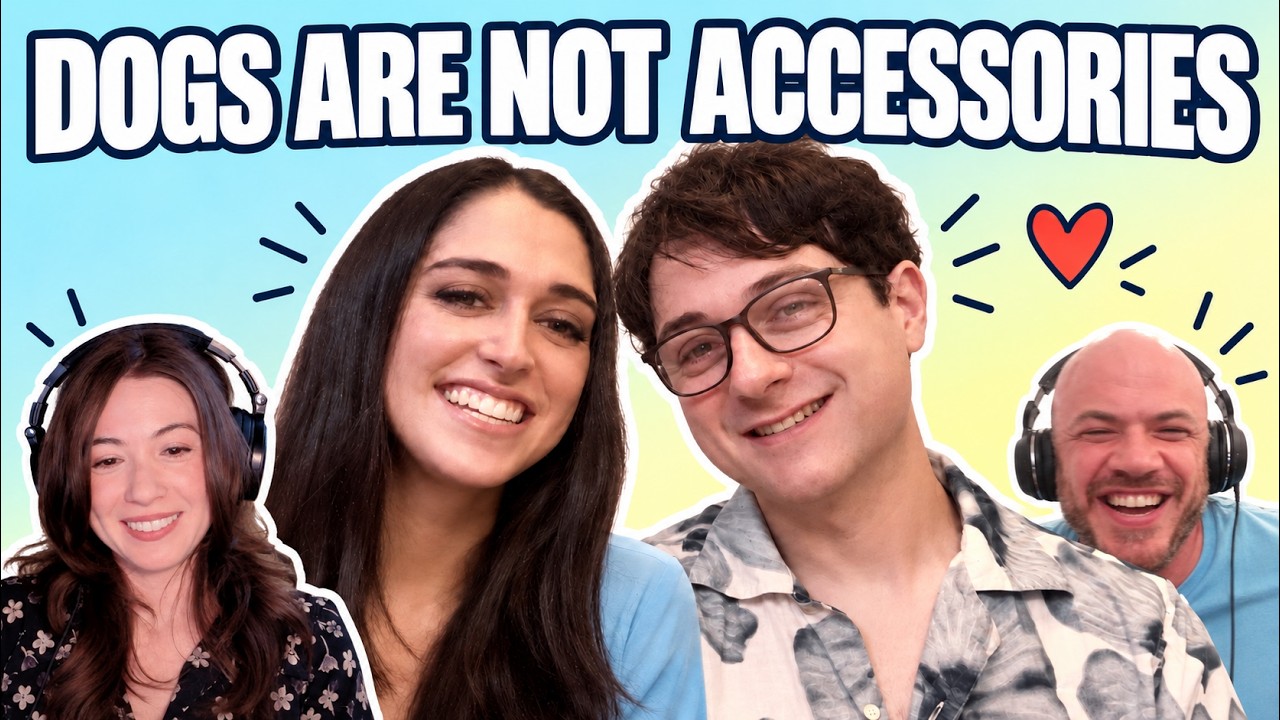
I've been chewing on the "adopt, don't shop" conversation a lot lately, but from the other side of it than usual. It's not the adopt crowd that gets under my skin, it's how much of the "shop responsibly" response ends up being a justification exercise dressed up as ethics. People will spend paragraphs explaining why they went to a breeder: health testing, predictable temperament, working lines, whatever it is, and somewhere in that explanation, shelter and rescue dogs quietly get cast as the riskier, messier, less trustworthy option. For most pet owners' actual day-to-day needs, that framing doesn't really hold up. But here's the part that keeps getting skipped: wanting a specific breed in the first place is rarely a purely rational decision either. It's consumer psychology, same as the rest of us. My boyfriend wants a golden retriever because his family had goldens growing up, that's nostalgia, not a spreadsheet of breed traits. I grew up with a black lab, so when we went looking, that's what we asked for, and the shelter told us that's what we were getting. She turned out to be a very beautiful, very mysterious mutt. Wanting a specific breed isn't the problem. The problem is building an entire moral framework around "shopping responsibly" without admitting your own preference started in the same place everyone's does: familiarity and aesthetics, not ethics. Own that part before you use it to talk down rescue dogs.
On a smaller, happier note: Kona has always been weird about dog sitters (uncertain, standoffish, the whole deal), and since I travel for work a lot, that guilt follows me onto every flight. This week our new sitter texted to say how sweet she's being. Kona's whole personality is basically: she does not like you until she loves you, and then it's like leveling up in a video game: the hard part is all front-loaded, and after that it gets easy. Which, honestly, is a pretty good metaphor for a lot of life. You lift weights when you're young so you don't lose bone density later. You invest early so compounding interest does the work for you. You wear sunscreen at 22 so you're not booking a last-minute trip to Korea at 32 to get sunspots lasered off. Front-load the hard part. Kona agrees.
|
|
🗂️ SUBMIT A RESOURCE
Know a resource other pet parents should have?
A vet you trust, a low-cost clinic, a rescue doing great work, a tool that's actually helped you. Just hit reply to this email and tell me about it, and if it checks out, I'll add it to the resources page for everyone else.
|
|
|
|
That's the roundup for this week. If you want to check where the science actually lands on a claim before you share it, my "What Does the Research Say" consensus tool has 17 common dog claims rated from REFUTED to STRONG. It's free, no ads, no catch.
And since we're talking about it, hit reply and tell me: team adopt, team shop responsibly, or (like me) team "we didn't even mean to end up with the dog we got"? I read every reply, and I'm collecting good origin stories for a future edition.
See you next week,
Alexandra & Kona 🐾
|
|
|
|
|